


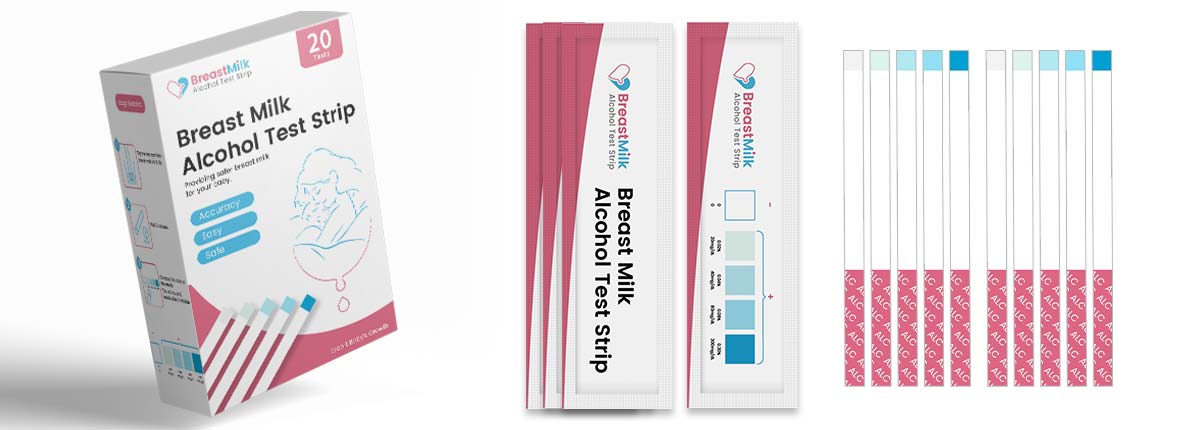
Misunderstandings about alcohol strips for breast milk appear often among parents. These misunderstandings can affect both safety and confidence. Many people believe that alcohol helps increase breast milk production, but alcohol can actually reduce it, especially right after drinking. Some think moderate alcohol use has no effect on nursing infants, yet studies show infants may get less milk if a mother nurses soon after drinking.
- Many believe alcohol increases milk production, but it can actually decrease it.
- Some assume moderate alcohol is harmless for nursing mothers and babies, yet infants may receive less milk after the mother drinks.
Accurate knowledge helps parents use alcohol strips for breast milk with confidence and make safer choices.
Key Takeaways
- Alcohol can decrease breast milk production. Many believe it increases supply, but this is a misconception.
- Alcohol strips indicate if alcohol is present, not how much. They provide a simple yes or no answer.
- Timing is crucial. Wait the recommended time before testing to ensure accurate results.
- Different brands of alcohol strips may vary in sensitivity. Always check the instructions for your specific brand.
- Use alcohol strips as a tool, not a substitute for professional advice. Combine results with established breastfeeding guidelines.
Alcohol Strips for Breast Milk Basics
How They Work?
Alcohol strips for breast milk help parents check if their milk contains alcohol after drinking. The strip, often called breast milk alcohol test strip, provides a quick and simple way to test milk at home. To use them, a person expresses a few drops of breast milk onto the strip. The strip reacts with the milk and begins to change color if alcohol is present. Most alcohol test strips require a waiting period of about two minutes before reading the result.
Tip: Always follow the instructions on the package for the most accurate results.
The strips detect alcohol at specific levels, usually around 13.1 mg/dL or higher. This threshold helps parents decide if their milk is safe for their baby. The process does not require any special equipment, making it accessible for most families.
What They Show?
Alcohol strips for breast milk show whether alcohol is present in the milk sample. The color change on the strip indicates the presence of alcohol but does not measure the exact amount. The result is usually a simple yes or no answer. If the strip changes color, alcohol is present at or above the detection limit. If there is no color change, the milk likely contains little or no alcohol.
- The strips do not provide a precise measurement of alcohol content.
- They cannot tell how much time has passed since drinking.
- Results may vary slightly between brands, but the main function remains the same.
Parents should remember that alcohol strips for breast milk serve as a helpful tool, not a guarantee. They offer reassurance but do not replace professional advice or established breastfeeding guidelines.
Not Waiting Long Enough
Timing Matters
Timing plays a crucial role when using alcohol strips for breast milk. Many parents want quick answers, but rushing the process can lead to unreliable results. After drinking while breastfeeding, a breastfeeding mom must allow enough time for alcohol to leave her system before testing her breast milk. The breast milk alcohol test strip detects alcohol in breast milk only if the timing aligns with the body’s natural metabolism. If a parent tests too soon, the strip may not reflect the true level of alcohol in breast milk.
Tip: Always follow the recommended waiting period on the package. Most strips require at least two minutes for an accurate reading.
Some health experts, including registered nurses and lactation consultants, express skepticism about the accuracy of these test strips. The American Academy of Pediatrics also states that milk test strips are unnecessary and have not been sufficiently studied. These concerns highlight the importance of using the strips correctly and not relying solely on them for safety decisions.
Inaccurate Results
Insufficient waiting time before testing can cause inaccurate results. If a breastfeeding mom does not wait long enough after drinking, the alcohol strips for breast milk may not detect alcohol levels accurately. This can create a false sense of security or unnecessary worry. The following table explains the risk:
| Evidence | Explanation |
|---|---|
| Insufficient waiting time can lead to inaccurate results | If the mother does not allow enough time for alcohol to metabolize, the test strips may not detect alcohol levels accurately. |
Parents should remember that breast milk alcohol test strips serve as a tool, not a guarantee. They should combine test results with knowledge about alcohol in breast milk and established guidelines for safe breastfeeding. Careful timing and proper use help ensure the best results and protect the health of both mother and baby.
Misreading the Color Change
Presence vs. Amount
Many parents believe that a color change on a breast milk alcohol test strip shows how much alcohol is in the milk. This is not true. The strip only tells if alcohol is present at or above a certain level. It does not measure the exact amount. Alcohol strips for breast milk react to the presence of alcohol, but they do not give a precise reading.
Alcohol passes easily into breast milk. The level in the milk matches the level in the mother’s blood. After drinking while breastfeeding, alcohol can stay in breast milk for about 2.5 hours after a standard drink. If a mother drinks more, alcohol stays longer. The strips can show if alcohol is present, but they cannot tell when the milk will be free of alcohol. For a more accurate idea, experts suggest using time-based charts, called nomograms, instead of relying only on the strip.
- Alcohol moves quickly into breast milk and matches blood alcohol levels.
- Alcohol can be detected in breast milk for several hours after drinking.
- Strips only show presence, not concentration.
Avoiding False Assumptions
Misreading the color change on a breast milk alcohol test strip can lead to mistakes. Some parents check the strip too early or too late. The correct time to read the strip is exactly two minutes after adding the milk. Reading it before or after this time can give a false result. If there is no color change at two minutes, the milk does not have alcohol at or above the detection limit. A color change after two minutes does not mean alcohol is present; it may be a reaction to air or light.
| Key Point | Explanation |
|---|---|
| Timing | The test should be read exactly 2 minutes after saturation with breast milk. |
| No Color Change | If there is no color change at 2 minutes, alcohol is not present at or above 13.1 mg/dL. |
| Late Color Change | A color change after 2 minutes does not indicate alcohol presence; it is a reaction to environmental elements. |
Tip: Always follow the instructions for timing and interpretation to avoid false assumptions.
Parents should remember that alcohol strips for breast milk are a helpful tool, but not a substitute for professional advice or time-based guidelines.
Ignoring Strip Differences
Brand Variations
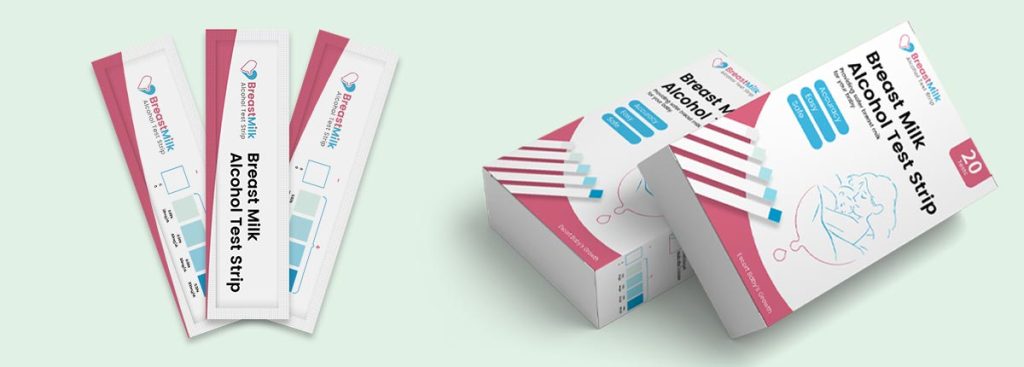
Not all breast milk alcohol test strips work the same way. Each brand uses its own technical specifications, which can affect sensitivity, reaction time, and detection methods. Some strips react faster, while others may require a longer wait. A breastfeeding mom should always check the instructions for her specific brand before testing. When choosing a strip, parents should consider several important factors:
- Technical specifications and standards, such as sensitivity and reaction time
- Compliance with industry requirements and certifications
- Performance metrics, including accuracy and independent validation studies
- Cost per test and available discounts for bulk purchases
- Quality assurance, including transparent control processes and positive reviews
- Ease of use and clarity of result interpretation
- After-sales support and responsiveness from the supplier
These points help parents select a reliable product for testing breast milk after drinking while breastfeeding. A careful choice ensures that the test results are trustworthy and easy to understand.
Consistency Issues
Different brands of breast milk alcohol test strips may not always give the same results. Some strips show a color change more clearly, while others may be harder to read. This inconsistency can confuse parents, especially if they switch brands or use strips from different batches. Even small changes in manufacturing can affect how the strip reacts to alcohol in breast milk.
Parents should use the same brand and batch whenever possible to maintain consistency. If they notice different results from similar samples, they should check the expiration date and storage conditions. Using expired or poorly stored strips can lead to false readings. When in doubt, parents should consult a healthcare provider instead of relying only on the strip. Consistent use and careful attention to detail help reduce mistakes and support safe practices, such as avoiding unnecessary pumping and dumping.
Skipping Proper Saturation
How to Use Breast Milk Alcohol Test Strip?
Many parents overlook the importance of fully saturating the breast milk alcohol test strip. Proper saturation ensures that the strip reacts accurately to the sample. When a parent tests breast milk, they should cover the entire reactive area of the strip with milk. A dry or partially covered strip may not show the correct result. The instructions on most packages recommend using enough milk to soak the test area completely.
Tip: Always use fresh breast milk and avoid touching the reactive area with fingers. This prevents contamination and helps maintain accuracy.
A parent should wait the recommended time before reading the result. The color change will only appear if the strip receives enough milk. Incomplete saturation can cause the strip to miss alcohol that is present. This step is especially important after drinking while breastfeeding, as parents want reliable information before feeding their baby.
Preventing False Negatives
False negatives occur when the breast milk alcohol test strip fails to detect alcohol that is actually present. Inadequate saturation is a common cause. Parents who rush the process or use too little milk may see a negative result even if alcohol remains in the sample. To prevent this mistake, they should follow these steps:
- Express a sufficient amount of breast milk.
- Apply the milk evenly across the entire test area.
- Wait the full recommended time before checking the color.
| Step | Why It Matters |
|---|---|
| Full saturation | Ensures accurate reaction |
| Even application | Prevents missed detection |
| Proper timing | Avoids misreading results |
Parents who use the correct technique reduce the risk of false negatives. They also avoid unnecessary pumping and dumping, which can waste valuable milk. Consistent and careful use of the breast milk alcohol test strip supports safe feeding decisions.
Overlooking Breastfeeding and Alcohol Guidelines
Strips Are Not a Substitute
Many parents trust the breast milk alcohol test strip for quick answers, but these strips cannot replace safe breastfeeding and alcohol practices. Health organizations, including the American Academy of Pediatrics, stress that alcohol passes through breast milk and can affect a nursing baby. Relying only on test strips may give a false sense of security. Parents should always combine test results with established guidelines and professional advice.
| Evidence | Description |
|---|---|
| Alcohol passes through breast milk | The American Academy of Pediatrics (AAP) advises against alcohol consumption while breastfeeding due to the risks it poses to infants. |
| Pumping and dumping is ineffective | Expressing milk after drinking does not expedite the reduction of alcohol in breast milk; it decreases only as it leaves the mother’s bloodstream. |
| Long-term exposure concerns | There are rising worries about the effects of repeated alcohol exposure on infants through breast milk, highlighting the need for moderation. |
Note: Pumping and dumping does not remove alcohol from breast milk. Only time allows alcohol to leave the body.
Health authorities recommend that if a mother consumes alcohol, she should wait to breastfeed until she is completely sober. For moderate drinking, breastfeeding immediately before consuming alcohol and then waiting about three hours before nursing again can minimize the baby’s exposure to alcohol. The CDC indicates that alcohol from one drink can be detected in breast milk for approximately 2-3 hours, while two drinks can be detected for about 4-5 hours, and three drinks for about 6-8 hours.
Understanding Alcohol Metabolism
Alcohol in breast milk matches the level in the mother’s blood and peaks 30 to 60 minutes after drinking. Several factors influence how long alcohol stays in the milk, such as the speed of drinking, food intake, body weight, and individual metabolism. Newborns process alcohol much slower than adults, which increases the risk for the nursing baby.
| Evidence | Description |
|---|---|
| Alcohol in Breast Milk | Alcohol levels in breast milk are similar to those in maternal blood and peak 30 to 60 minutes after consumption. |
| Factors Influencing Alcohol Presence | Factors include the speed of consumption, whether food is consumed, maternal body weight, and individual variations in metabolism. |
| Metabolism Rate | Newborns metabolize alcohol at 25% to 50% of the adult rate, affecting how alcohol is processed in infants. |
Thomas W. Hale, R.Ph. Ph.D. states: “Alcohol transfers into human milk readily… This does not necessarily mean the dose of alcohol in milk is high, only that the levels in plasma correspond closely with those in milk.”
- Alcohol from one drink can be detected in breast milk for about 2 to 3 hours.
- Two drinks extend detection time to about 4 to 5 hours.
- Three drinks can be detected for about 6 to 8 hours.
Parents should use the breast milk alcohol test strip as a helpful tool, not as a replacement for professional guidance. They should always consider both the test result and the recommended waiting times before feeding their baby.
Conclusion
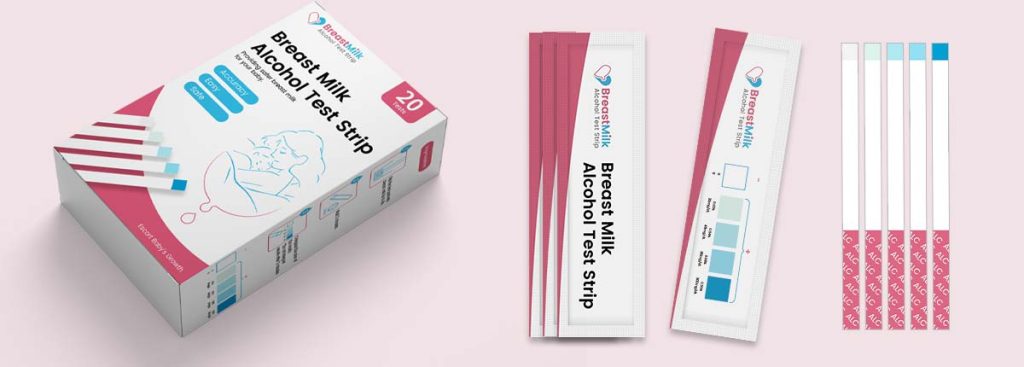
Understanding and avoiding common mistakes with alcohol strips for breast milk helps parents make safer choices. Correct use, along with safe breastfeeding and alcohol practices, brings greater peace of mind. Lactation consultants recommend the following:
- Do not suggest ‘pump and dump’ since it does not lower alcohol in breast milk.
- Share accurate, nonjudgmental information to support confident decisions.
Parents can access professional resources for guidance:
- Patient education materials from the Washington State Department of Health.
- Multilingual documents on alcohol and lactation risks and harm reduction.
FAQ
How Accurate Are Alcohol Strips for Breast Milk?
Alcohol strips for breast milk provide a quick indication of alcohol presence. They do not measure exact amounts. Accuracy depends on following instructions carefully. Strips serve as a helpful tool, but they do not replace professional advice or established breastfeeding guidelines.
Can Alcohol Strips Be Reused?
Alcohol strips for breast milk are single-use only.
Once exposed to breast milk, the strip cannot provide a reliable result if used again. Always use a new strip for each test.
Do Alcohol Strips Detect All Types of Alcohol?
Alcohol strips for breast milk detect ethanol, the type of alcohol found in beverages. They do not react to other substances or medications. Parents should not use these strips to test for other chemicals.
What Should Parents Do If the Strip Shows Alcohol?
- Wait before breastfeeding.
- Follow time-based guidelines for alcohol clearance.
- Consult a healthcare provider for advice.
A positive result means alcohol is present at or above the detection limit. Time and metabolism remove alcohol from breast milk.